Wajenzi Hack 1.0: From Hosting Online Sessions to Running a Physical Event
A reflective account of organizing Wajenzi Hack 1.0, exploring the shift from online community sessions to executing a physical tech event, including challenges, lessons, and real experiences.

You’ll ask why I’m writing this in March yet the event was in November. It’s simple. I kept postponing it. I had already written it in my head, just never sat down to type it.
Before Wajenzi Hack 1.0, most of what we did at Salamander Tech Hub lived online. Sessions were easier to manage in that space. If something went wrong, you adjusted quickly and moved on. There was always a way to recover without too much pressure.
A physical event does not give you that kind of flexibility.
Planning Wajenzi Hack 1.0 felt like stepping into something we had not fully understood. Things that never mattered before suddenly became central.
Finding a venue was not straightforward. It changed more than once. Funding was uncertain, and November was a bad time to be asking. Most organizations were closing their books, and you could feel that in every unanswered message.
There was also a different kind of fatigue. Not the kind you get from running sessions, but the one that comes from constantly following up, aligning people, and trying to keep things moving when nothing feels stable yet.
At some point, the event stopped being an idea and became something that had to happen whether we felt ready or not.
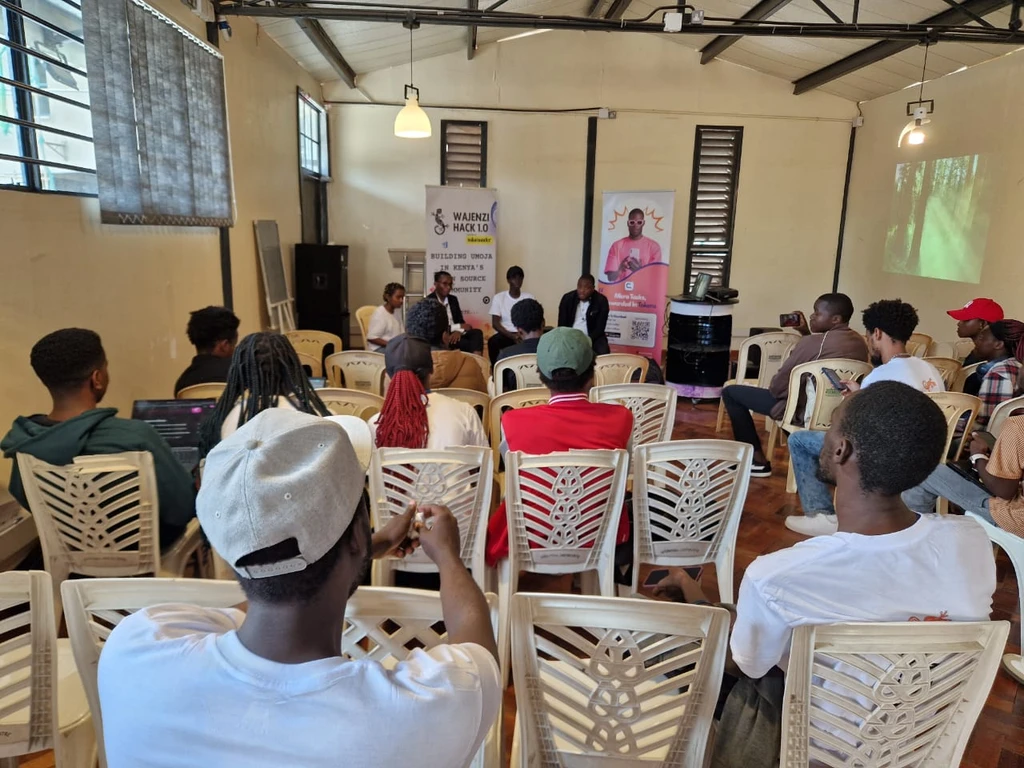
The day itself looked fine from the outside. People showed up. Conversations were happening. Sessions ran. If you were attending, it probably felt smooth.
From our side, it did not feel like that.
There were small things being fixed quietly. Adjustments happening in the background. Nothing dramatic, just a constant need to stay alert and respond. That’s what we call composure.
What stood out to me was how different the interaction felt compared to online sessions.
People were more present. They asked more. They stayed longer in conversations. The collaboration felt natural, not something you had to encourage.
The open source discussions also landed differently. Online, those conversations can feel distant. Here, they felt immediate. People were not just listening, they were trying things out, asking how to get started, figuring things out together.
One moment that stayed with me was seeing something built during the event that we did not plan for. Andrew Kim Joseph put together a simple tool, Judy, to help judges score participants. It was not polished or complex, but it solved a real need at that moment.
That kind of responsiveness is hard to replicate online.
The partners we worked with: One Hope, Canvassing, Technetium, MUIAA, Cradle Voices, and Sunny.Branding also became more real in this setting.
Their support was not just names on a document. You could see the role they played in making things hold together.
Looking back, the biggest shift for me was understanding how exposed everything becomes in a physical event.
Weak planning shows up quickly. Miscommunication becomes obvious. There is less room to hide behind adjustments.
At the same time, the impact is clearer. You can see people engage. You can tell when something is working.
Wajenzi Hack 1.0 was not perfect. A lot of it felt uncertain while we were doing it.
But it worked.
And it changed how I think about building community. Not just gathering people, but actually holding a space together.
I would do it again. Just with a better sense of what it really takes.
See you at Wajenzi Hack 2.0.
1 comment